
a small Quran reflection

I’ve been teaching a general introduction to world religions at a community college. The last unit was on Islam, which I designed as an introduction to the Quran. The Quran’s early Meccan chapters (suras) have a poetic quality that is striking.
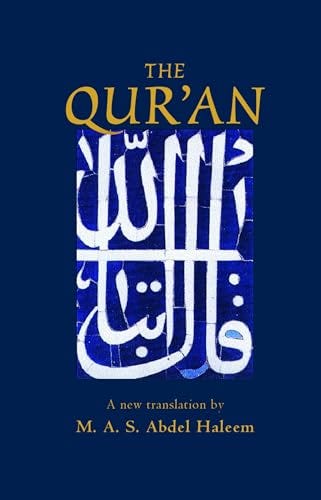
This week we read Sura 81 of the Quran, a description of Judgment Day which I find striking for several reasons. Here’s Muhammad Haleem’s translation:
In the name of God, the Lord of Mercy, the Giver of Mercy
When the sun is shrouded in darkness,
when the stars are dimmed,
when the mountains are set in motion,
when pregnant camels are abandoned,
when wild beasts are herded together,
when the seas boil over,
when souls are sorted into classes,
when the baby girl buried alive is asked
for what sin she was killed,
when the records of deeds are spread open,
when the sky is stripped away,
when Hell is made to blaze
and Paradise brought near:then every soul will know what it has brought about.1
(81:1-14)
So I adore this Sura’s imagery, reminiscent of passages like Isaiah 64:
Oh, that you would rend the heavens and come down,
that the mountains would tremble before you! (v. 1)
This Sura turns from disturbing images in nature to a disturbing image of human evil: from the cosmic plane of darkened skies to the human plane of an infant girl buried alive—an evil from Muhammad’s pre-Islamic Arabia that God is rebuking.
One does not need to be a Muslim here to appreciate the message communicated about God’s character: God sees all; there is no escape from justice. Again, this is a deep commonality with the Bible. The cosmic disruption of nature’s ordinary courses is revealed as something fitting, rather than unprecedented; it is really a divine response to OUR disruption of the moral order when we are complacent with a society that condones monstrous acts. It is not God who acts unnatural on Judgment Day, but rather humanity who acts unnatural with every unjust choice and unjust way of life.
M.A.S. Abdel Haleem, “Shrouded in Darkness (Al-Takwir),” in The Qur’an: A New Translation, Oxford World’s Classics (Oxford University Press, 2004), 411.